Ethiopian Menu
Over the last decade, there has been a tremendous growth of popular interest in Ethiopian cuisine across the big cities of the world, Ethiopian cooking, like Ethiopia itself, now em-bodies elements of several cultures – in Ethiopia there are over 80 languages spoken by people of different ethnic groups living side by side as members of a nation with a long and continuous history of independence and by-and-large unadulterated traditional values. Food in Ethiopia is perhaps more important in everyday social relations than it is in western cul-tures; it is varied, it is interesting, and it is delicious.
Ethiopian hospitality and focus on customer service is without parallel anywhere else in the world. In any Ethiopian home, the arrival of a guest is followed almost automatically by the offering of food. It is an insult not to offer it, and, even if one is not hungry, it is an insult not to accept.
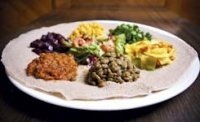
Ethiopian food is made from all natural ingredients. In Ethiopia food is almost always pre-pared by hand, retaining the fiber and flavors in food bits and pieces. Ethiopian cooking is marked by hot spices, thick stews called Wat, and Injera, a large, flat sourdough bread made from whole grain products. Diners of Ethiopian cuisine use the Injera as an eating utensil to scoop up food. A large variety of Ethiopian vegetarian dishes evolved due to the tradition of abstinence from all animal products during the many Orthodox Christian fasting days that are observed in Ethiopia.